Start with your life, not a perfect programme
Staying active with a chronic condition often means adapting what you do as symptoms and circumstances change. Movement can support function and wellbeing, but it cannot explain or solve every symptom. A sustainable routine starts with a realistic picture of your health, the activities you value and the support you need.
You do not need to earn the right to move by reaching a fitness standard. Equally, there is no obligation to push through concerning symptoms to prove commitment. A good plan leaves room for treatment, rest, medical advice and practical barriers. The aim is a manageable relationship with activity, rather than a competition with your previous abilities.
Understand the pattern before changing the load
Notice when symptoms occur and whether they are familiar or new. A short record could include the activity, duration, effort, symptoms afterwards and how you feel the next day. This can make a discussion with your healthcare team more concrete. The record is a conversation aid, not a tool for diagnosing yourself.
Also consider what else changed: a recent infection, medication change, poor sleep, a busy day or a different surface underfoot. If a task is difficult, changing the environment may help as much as changing the exercise. A nearer venue, a chair available for breaks or a different time of day may make participation more accessible.
Pain and stiffness need an individual response
Some people with osteoarthritis experience discomfort when beginning exercise; a tailored programme can still help longer-term function. However, this does not mean every pain should be ignored. New severe pain, an injury, an unusually swollen joint or rapidly changing symptoms should be assessed rather than managed solely by reducing repetitions.
For an established condition, ask your clinician what symptom changes are acceptable and when to seek review. You may be able to adjust range, support, resistance or activity choice. Avoid treating pain scores as a universal traffic-light system: the same number can mean different things in different people. The quality of symptoms and the clinical context matter.
Working with fatigue
Fatigue can affect concentration, confidence and the ability to carry out everyday tasks. Identify priorities and choose a starting amount you can manage, rather than using every better day to catch up on everything. Planned pauses and spreading demanding tasks across the week may make your schedule more workable.
Persistent or worsening fatigue deserves medical review, particularly when it is new or unexplained. It may have treatable contributors. If even small amounts of exertion cause a delayed, substantial worsening lasting beyond ordinary recovery, do not automatically follow a fixed progression plan. Ask for assessment and condition-specific advice; some illnesses require a different approach to activity management.
Breathlessness: familiar does not always mean safe
People can become breathless for many reasons, including heart or lung conditions, infection, anaemia and reduced fitness. New or increasing breathlessness should not be assumed to be deconditioning. Follow your existing clinical plan and seek advice when the pattern changes. An instructor cannot establish the cause during an online class.
Call 999 in the UK for severe difficulty breathing, chest tightness or heaviness with concerning symptoms, blue or grey skin or lips, collapse or sudden confusion. NHS advice recommends urgent help through 111 for symptoms such as increased breathlessness, coughing blood or pain and swelling in one leg. Outside the UK, contact the equivalent local service. Do not keep exercising while waiting to see whether a serious symptom passes.
Make movement more accessible
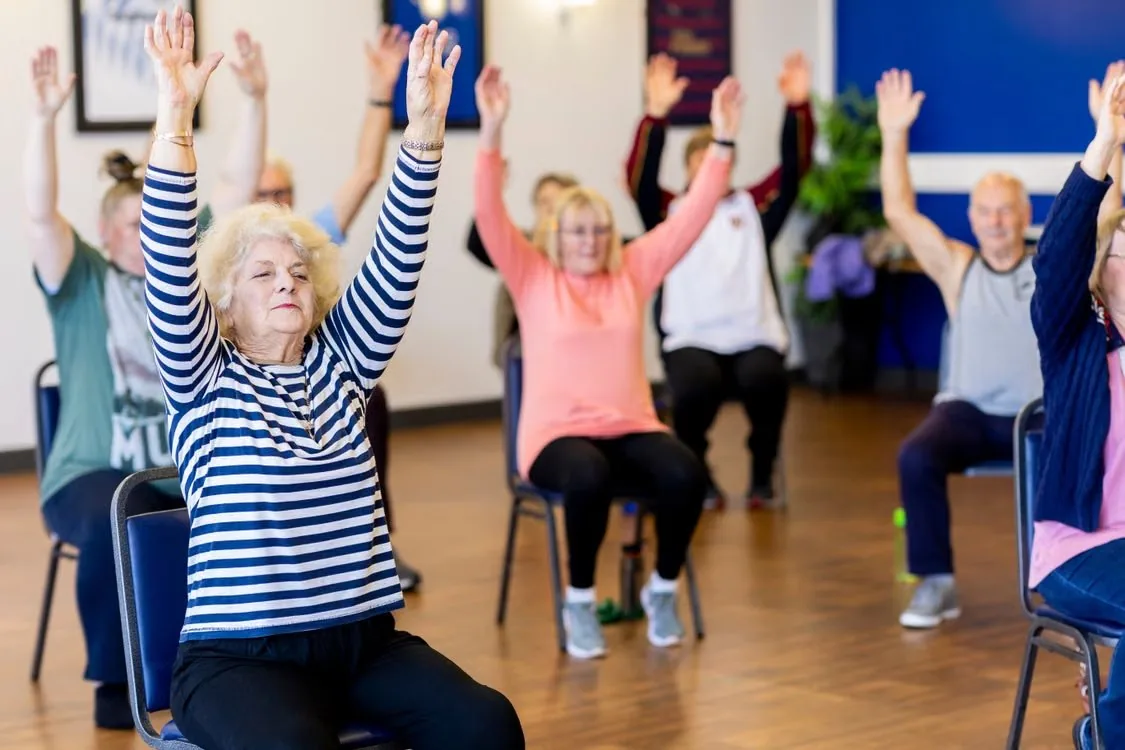
Mobility limits may call for seated options, a stable support, shorter activity periods or an accessible route. Balance difficulties and falls need appropriate assessment; challenging yourself without support is not always helpful. Ask whether a mobility aid, rehabilitation service or individual session would meet your needs better than a general class.
Choose a meaningful goal that you can describe: reaching a nearby bench, preparing part of a meal or moving more confidently around your home. Then discuss which activities might support it. A goal grounded in your life helps you judge whether a programme is useful. Progress may mean needing fewer breaks or feeling more secure, rather than lifting a heavier weight.
Build confidence with clear arrangements
Before joining a session, ask about its format, adaptations, instructor experience and suitability process. Tell the provider about relevant restrictions through the approved secure pathway. You should know how to stop, ask a question and obtain help. For an online session, prepare your space and keep a phone nearby; remote supervision has limits.
Review your plan after changes in health or treatment and after repeated difficulty tolerating sessions. The appropriate next step may be reducing the load, seeking a clinical review or choosing another service. Exercise and wellbeing support can sit alongside medical care. It should not leave you feeling that uncontrolled symptoms are your fault or that booking another class is the answer to every problem.
References & further reading
- NICE NG226: Osteoarthritis recommendations
- NICE NG193: Chronic pain recommendations
- WHO: Physical activity
- NHS: Shortness of breath
- NHS: Osteoarthritis treatment
- NICE NG206: ME/CFS recommendations on energy management and activity
Sources checked on 28 October 2026. Referencing an organisation does not imply its endorsement of MOLA CLUB.